Monday, March 28, 2016
Writing for my food blog

Sunday, March 27, 2016
Performance enhancements

Above is my satirical performance enhancements advertisement. A performance enhancing substance is one that contains a stimulant, amino acid, and a hormone precursor herb. Looking at my ad, it is easily seen that the costs of using performance enhancements outweigh the benefits. To become a better athlete you can always just practice more. Even though it takes longer, exercising does not come with as many risks as steroids do and it actually benefits our bodies. Performance enhancements are very risky, so I am still confused on why athletes even consider taking them. I think it comes down to how much student athletes are educated on the befits and risks of these deadly substances.
Monday, March 21, 2016
Chicken Dissection Lab
In this lab we dissected a chicken to see all of its muscles and relate it to our own muscles. We examined the chicken's breast, upper back, upper arms, forearms, thigh, and drumstick. We took pictures during the lab and we labeled the muscles we saw:


Muscles, bones, and tendons all play a role in movement. Specifically, this is how we are able to move our forearms. Our muscles do the pulling, so to move our forearms upward, our biceps contract, making our triceps relax. This contraction of the biceps pulls on the tendons connecting bone to muscle. The bone in this case are the radius and ulna (because the joint that is being used is the elbow).
There are differences between the tendon at the origin and the tendon of the insertion. The tendon of the origin does not move very much; the tendon of the insertion does move. When a muscle contracts the tendon of insertion gets closer towards the tendon of origin. The insertion of the tendon also tends to be more distal, although it doesn't for sure have to be.
There are also some differences between chicken muscles and human muscles. An obvious difference is the size of chicken muscles are smaller than that of human muscles, except for the breast (the chicken breast seems to be bigger). Chickens also have similar muscles to us; for example, they have biceps and triceps as well. A difference between the two is also that chicken muscles have different names than human muscles, but both the names are describing a similar muscle. For example the Iliotibialis, in birds, is equivalent to the gluteus maximus in humans.
Thursday, March 17, 2016
2nd Blog Post 20% Time
2 week progress report:
So far I have chosen my first recipe to work on. I chose to switch out all purpose flour for whole wheat in my mom's banana bread recipe. I chose this recipe because it is one of my favorites and I wanted to avoid copyright issue that come with using other people's recipes.I have researched about the effects of whole wheat on our bodies and some of the differences between whole wheat and white flour. I am making a bibliography on noodletools to keep track of my research.
I have learned that I am capable of doing this research project, I just have to take it one step at a time and break the project into smaller goals. My first goal is to finish researching.
I have not had any set backs yet. I will continue researching on the effects of whole wheat on our bodies. After I am done with that, I will create a blog post using the research and start experimenting with the recipe.
I have learned that whole wheat is important for people who need to control their blood sugar levels. Whole wheat does not spike blood sugar levels as much as flour does. Whole wheat also has more fiber than flour does, which means that it can prevent constipation and help people potentially lose weight. These are only a few of the benefits of whole wheat; there are more benefits that I have yet to research.
I have learned that I am capable of doing this research project, I just have to take it one step at a time and break the project into smaller goals. My first goal is to finish researching.
I have not had any set backs yet. I will continue researching on the effects of whole wheat on our bodies. After I am done with that, I will create a blog post using the research and start experimenting with the recipe.
I have learned that whole wheat is important for people who need to control their blood sugar levels. Whole wheat does not spike blood sugar levels as much as flour does. Whole wheat also has more fiber than flour does, which means that it can prevent constipation and help people potentially lose weight. These are only a few of the benefits of whole wheat; there are more benefits that I have yet to research.
Sunday, March 13, 2016
"What Happens When You Stretch"
 3 quotes + analysis:
"One of the reasons for holding a stretch for a prolonged period of time is that as you hold the muscle in a stretched position, the muscle spindle habituates and reduced signaling."
- This quote is interesting because it explains how stretching can increase our flexibility if we stretch often and for long durations.
"This is one reason why sit-ups are good for strengthening the back as well as the stomach."
-Someone told me that sit-ups are bad for your spine and that they could make back problems worse. That statement contradicts the one in the reading, so I wonder which one is true.
"When stretching, it is easier to stretch a muscle that is relaxed than to stretch a muscle that is contracting."
I can relate to this quote because my yoga instructor tells us to take a hot shower before coming to practice because it relaxes our muscles.
Relate and Review:
This article relates to our class because we learned how muscles contract. When muscles contract the sarcomere contracts and when muscles stretch the sarcomere is relaxed. This article also relates to me personally because I occasionally go to yoga lessons. Our yoga instructor always tells us to "lift and lengthen" our muscles while we are stretching. This accurately describes our muscles because it is actually possible to lengthen our muscles. You are able to lengthen your muscles by holding a stretch for a longer period of time, therefore relaxing the muscle.
Monday, February 29, 2016
unit 6 reflection
 This unit was about the skeletal system, bones and joints. Some essential understandings were naming bones and joints. There are different categories of bones (long bones, short bones, flat bones, and irregular). As for joints, they can be characterized by their motion and the material they are blinded with. For describing motion these words are used: Synarthroses (immovable), Amphiarthroses (slightly movable), and Diarthroses (movable). For describing material these words are used: Fibrous (can be synarthroses, amphiarthroses, and diarthroses), Cartilagenous (can be synarthroses, and amphiarthroses), and synovial (can only be diarthroses). Synovial can only be diarthroses because synovial joins are always movable. Common synovial joints can be described as ball and socket joints, hinge joints, and sliding joints. Another major understanding for this unit is bone remodeling. there are two cells that assist in bone remodeling. One is osteoblasts (that are made by osteoprogenitor cells and turn into osteocytes). Osteoblasts build up bones and also secrete collagen. Then there are osteoclasts which break down bones. We also learned how to classify different bone fractures. A complete fracture is when the bone is broken completely through while a incomplete (greenstick) fracture is one that is not broken all the way through. A simple fracture doesn't tear through skin, but a complex fracture does go through skin. This is why a complex greenstick fracture cannot exist. A comminuted fracture is one that is broken into 3 or more pieces.

In this unit we did an owl pellet dissection. Here is the link to that: http://nimishaapblog.blogspot.com/2016/02/owl-pellet-dissection.html
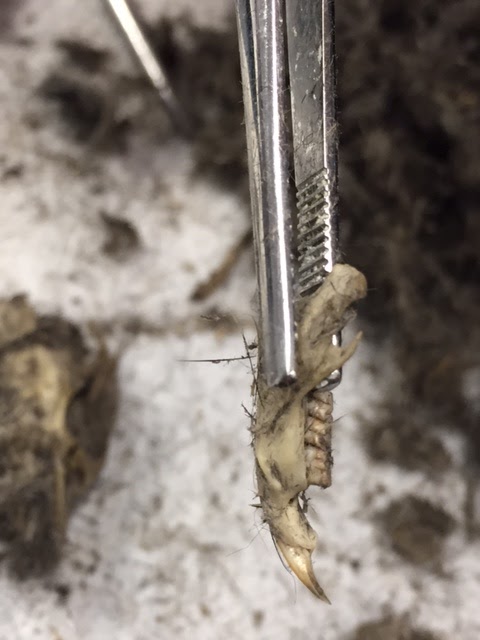
I am still confused about and wondering about the skull and how the bones in the skull are fused.
Checking back on my New Year's goals, I am keeping up with my work. However, I am not going to bed very early and I am definitely not getting 8 hours of sleep a night. I think I need to manage my time better and one way I can do that is by turning off my phone while doing homework.
Served to Scale -- blog post #1
20% Time is where students are given 20% of class time to work on a project of their choice. In our class we get to use our Mondays to work on the project. The essential question I asked myself is: "What are changes I can make to recipes to make them healthier?"
For my 20% Time project, I want to make a blog to explore that question. I chose this project because I enjoy food and I want to help my friends (who have misconceptions on dieting) eat healthier. I also want to become a better cook and food photographer so this project will help me achieve that goal. My goal for this next week is to find a recipe to share on my blog. I want to start off with my mom's banana bread because it's my favorite and I would love to share that recipe with more people. I will measure my progress and achievement by how many recipes I have made and how much I get done in the week. So far, I have created a separate blog for "Served to Scale." On the website I will be sharing recipes and general tips for health. I want to make these posts interesting and write them as a story, so they will be more than just a recipe. I am waiting until after I finish my first post to publish it. Moving forward, I want to start posting and adding to my blog. I am also considering sharing my smoothie recipe as my second post.
Subscribe to:
Posts (Atom)